Building a new product within a company like Gurtam, with over 20 years of history and deep telematics expertise, is always a challenge. And it’s not just a technical one.
When you’re surrounded by a global partner community, a mature Wialon ecosystem, a solid technological foundation, and thousands of projects running worldwide, the bar for quality rises automatically.
And then there are the expectations. The expectations of partners who want speed and flexibility. The expectations of stakeholders who look for strategic impact. The expectations of fleet owners who expect clarity, compliance, and a modern user experience. The expectations of the team eager to try bold ideas, yet risking being crushed by comparisons with an already established product.
How do you keep those expectations from burying the best ideas?
And how do you bring a new product to market that doesn’t just continue the Wialon story, but sets a new course for it?
We explored these questions with Aliaksandra Hancharova, Head of Product at Wialon, Gurtam, and Aleksey Shmigelski, Head of Wialon Platform Core at Gurtam — the people who guided the new Wialon Platform through its entire journey, from concept to market launch.
When market demands and internal curiosity aligned
The idea to create a new product within the Wialon suite originated from a simple truth: the telematics market was evolving fast. Partners needed new tools to stay competitive and explore new niches, and the Wialon ecosystem needed a new path to deliver them. At the same time, inside the company, the desire not only to support existing products but to build something new, something challenging, was becoming impossible to ignore.
The product truly took shape when these two needs overlapped, setting a clear direction for where the team had to go.
— What did you want to achieve for fleet owners and partners with this new solution?

Aliaksandra Hancharova:
For partners, to make them true owners of their solutions. The new platform provides them with flexibility, control, and the tools to innovate on top of Wialon, rather than around it.
For fleet owners, to provide a more usable, modern, and sleek experience that reflects today’s standards and expectations. Our goal was not only to redesign the interface but to rethink how people interact with data and make decisions.

Aleksey Shmigelski:
We immediately decided to take the product in a slightly different direction than other products in the suite. It would be similar in some places, weaker in others, stronger somewhere else, and sometimes just different. While we still don’t have many users or legacy, we are trying new ideas.
Challenge of creating a new product inside a GPS software company with global expertise
Gurtam has been developing products in the telematics industry for over two decades. Wialon is a well-established flagship solution with over 4 million connected vehicles, thousands of partners, and a reputation recognized globally in the telematics market. But legacy is a double-edged sword: it provides confidence and expertise, yet creates invisible pressure on every new idea. Expectations can guide you, or they can stop you. At the start of Wialon Platform, they certainly made an effort.
— What was the biggest challenge at the start: technical or emotional?
Aleksey Shmigelski:
Starting a new project inside a successful product company is always a challenge. Emotionally, you go through a storm: misunderstanding, denial, hesitant support, leadership’s determination… A quiet hope that the new product will solve old problems and open new opportunities. A fragile belief that it will all work out.
I’m really glad that this hope and belief were enough to carry us all the way to the release.
Navigating the long road of product development
Developing a new product is a true marathon that stretches over many months. And sometimes, the hardest part isn’t reaching the finish line; it’s keeping the team motivated and staying on course without losing momentum and the vision.
— How did you maintain motivation and focus across such a long process?
Aleksey Shmigelski:
We started with a blank slate, and many things were unclear at the beginning. The first thing I did was promise the stakeholders a monthly update and tried to align the team around that rhythm. That’s how we worked in those early months: a one-month sprint, a presentation for stakeholders, a short breather… And the next day, we’d take their feedback, adjust, and plan the month ahead.
Break a long journey into small milestones, and celebrate each one.
– What advice would you give to product managers who want to lead change, not just manage it?
Aliaksandra Hancharova:
Don’t be afraid to challenge the “we’ve always done it this way.” Real change starts when you question habits, not people. Be curious, be transparent, and let your team see themselves in the change you’re driving.
Aleksey Shmigelski:
Stay open and brave enough to walk through the jungle. There will be mud, rain, and unknown paths, but also waterfalls and rainbows. Keep moving and trust the people walking beside you.
Building the сore: architecture, no-code, and the technology behind Wialon Platform
Before exploring what the platform can do today, it’s worth examining the choices that shaped it: the architecture, the decision to build on flespi, and the move toward a no-code approach that became the core of Wialon Platform.
— What were you personally most curious to explore while shaping Wialon Platform?
Aliaksandra Hancharova:
I was most curious to explore how we could build a platform mindset: shifting from a product that solves specific tasks to a foundation that enables an ecosystem.
— What were you most curious to experiment with in terms of technology or approach?
Aleksey Shmigelski:
We introduced so many new things… it would actually be easier to list the “old” ones; there were far fewer of them. But the most interesting part is our use of flespi as the core development platform. It’s our database, our MQTT broker, our traffic processing layer, our analytics engine, our authorization system… Sounds like a lot, right? Well, that’s only half of it.
flespi not only solves a huge number of challenges for us, but also created several. Luckily, we’ve managed to find solutions to every one of them so far.
Before diving deeper, it’s worth briefly explaining what flespi is. It’s Gurtam’s own telematics and IoT cloud backend platform, a one-of-a-kind product on the market. As a high-performance data hub that receives, normalizes, stores, and streams messages from thousands of device types in real time, it provides unified APIs, an MQTT broker, logging, analytics, and device management tools, making telematics data easy to integrate into any solution.
Using flespi as the foundation allowed Wialon Platform to rely on a modern, scalable backend for all low-level operations and focus instead on business logic, configuration tools, and the user experience.
— You mention the flespi backend. Please explain what it gives partners compared to how Wialon Hosting works, for example.
Aleksey Shmigelski:
In Wialon, everything is developed from scratch: receiving device traffic, parsing protocols, storing data, and further processing and analytics. These systems operate stably and have been tested under loads of millions of units, proving their reliability over many years.
At the same time, we saw an opportunity to approach certain tasks in a new way. With Wialon Platform, we aimed to explore a new architectural direction: a more modular, flexible foundation built on flespi, allowing partners to configure solutions differently and address new types of scenarios.
To put this shift into context, flespi solves the same tasks of receiving and parsing traffic with further storage and processing of messages, but on a completely different level. There are logs, a convenient API, and an event broker. By developing the platform on the flespi base, we received a ready-made solution that handles these low-level tasks, and we were able to focus on solving business challenges.
But architecture alone doesn’t define a product. What partners feel is shaped by what they can build and how fast. Here, a different approach comes into play, providing visual configuration tools and a flexible architecture that eliminates the need for coding, allowing for high customization without dedicated engineering resources.
— Wialon Platform is a no-code platform. Please explain what this means in practice and how you arrived at this decision during product development.
Aliaksandra Hancharova:
What no-code means for Wialon Platform: many systems use a drag-and-drop approach, where you can simply move or click together the interface needed for a partner’s specific client. For our partners, this means they can assemble the needed solution in hours or days instead of days or months. How we arrived at this: When analyzing the needs of B2B2B products, you must consider all parties interested in the product. On one hand, we add checklists that help our partner’s clients complete certain tasks, for example, a vehicle inspection. On the other hand we also want to simplify the work of our partners themselves.
— In 2025, the most popular question is how AI is integrated into your product. So how is it integrated?
Aliaksandra Hancharova:
At this moment, AI works with our help center, and we have big plans for its further development. And I am also waiting for the ideas that the team will bring from the internal hackathon. Many projects from the previous one have influenced the development of our products.
Aleksey Shmigelski:
AI is definitely an assistant in solving user tasks, and the development team uses it daily. When it comes to product integration, we approach it cautiously. We do not want to add AI just to tick a box. We want it to bring real benefit. Wialon Platform is a highly configurable system. And anything flexible naturally creates questions and difficulties for users. We have several prototypes for adding AI to address these issues. But at the moment, they are only prototypes.
The power of shared ownership
The technology alone wasn’t what made Wialon Platform possible; behind every architectural decision and every experiment stood a team that carried the product from idea to release.
Wialon Platform is the result of a small yet highly skilled team of professionals at Gurtam. They were the dedicated group driving the product forward, navigating rapid growth, making tough decisions, and shaping the foundation of the new solution. At the same time, they remained an integral part of the wider Gurtam team, and the process of working closely with other departments became a value in itself, showing how collaboration and shared ownership can influence even the most ambitious product journey.
— What did this project teach you about teamwork and communication across teams?
Aliaksandra Hancharova:
It taught me that with transparency and shared ownership, we can make everything. When you work on something as big as Wialon Platform, no single team can have the full picture, but everyone must feel part of the same mission.
Regular syncs, open demos, and clear narratives about “why we’re doing this” helped us stay aligned. I learned how powerful it is when engineers, designers, the marketing team, customer service teams, and the business development team all speak the same product language.
Probably, one of the biggest challenges before the launch wasn’t technical at all. It was onboarding every colleague who communicates with our partners. They had to learn the product (and they still are!) while it was evolving at incredible speed.
The fact that today the entire company is aligned, confident, and ready to support and grow Wialon Platform is an achievement in itself, and one we’re genuinely proud of.
The moment of truth: presenting Wialon Platform to the community
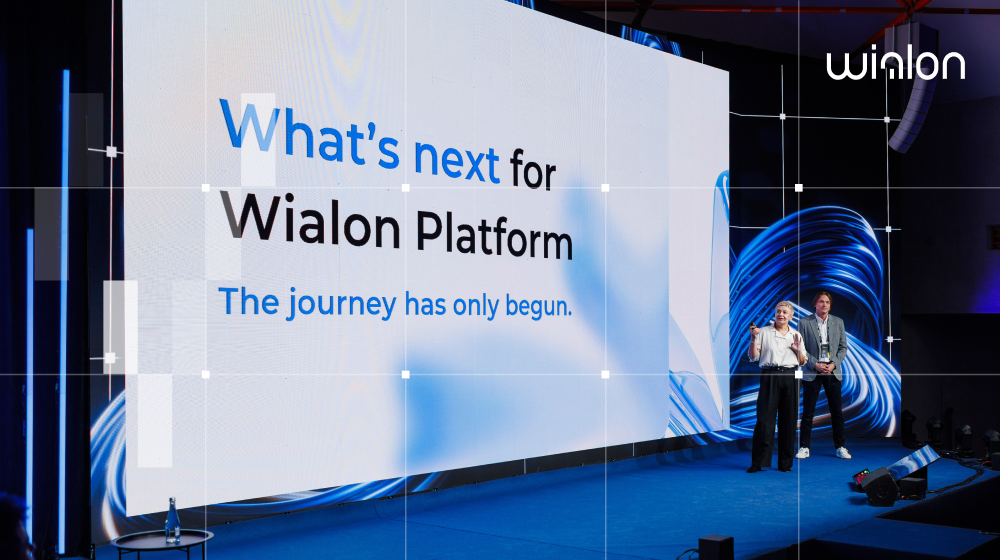
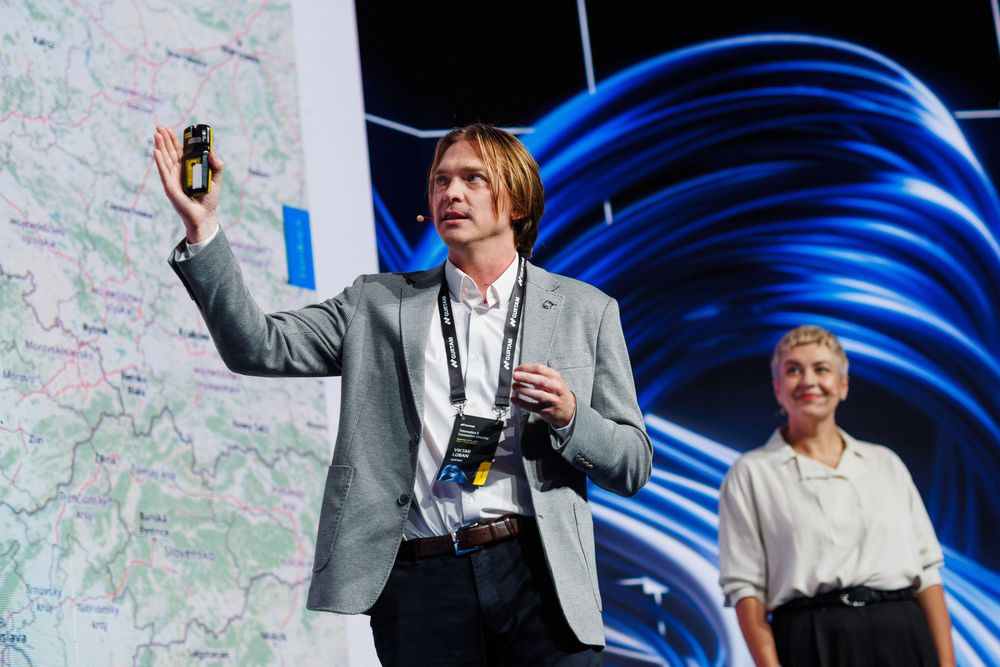
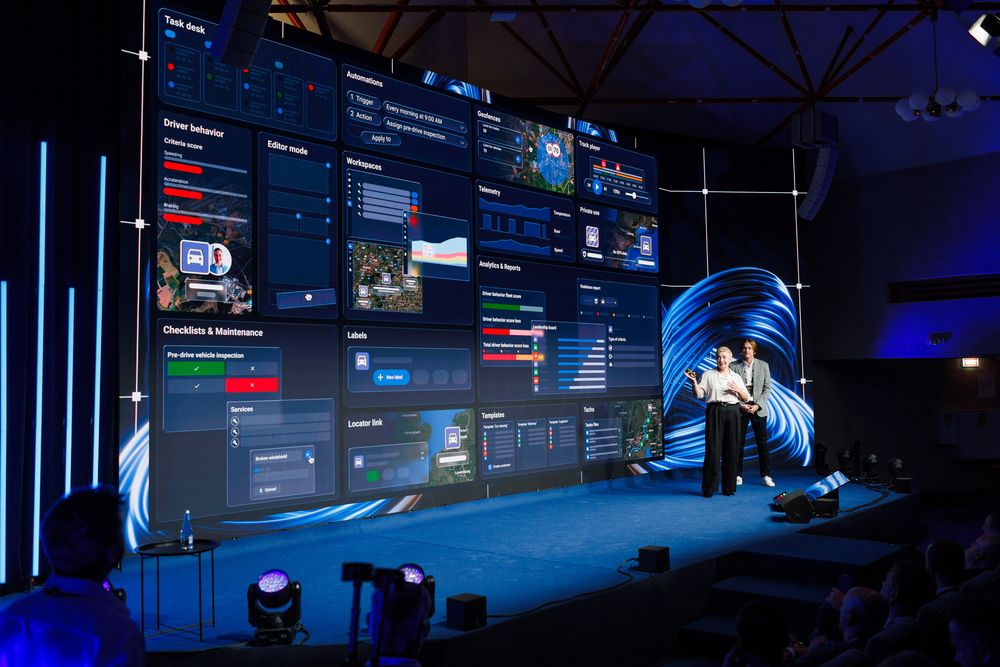
Presenting Wialon Platform at the Telematics & Connected Mobility conference in September proved to be both an ideal stage and a real test. It was the first time the product met the wider Wialon partner community — people with deep expertise and clear expectations. The tension faded only when it became obvious that the product resonated: partners were genuinely engaged, and the KPI for intro/demo requests was exceeded by 60%.
— So how did it feel to see that reaction firsthand?
Aliaksandra Hancharova:
It was an incredible boost. My personal feeling was WOW. Not every product manager has a moment like presenting such a product in their career. After the presentation, many partners came up personally, congratulated us on the release, and said they were very impressed with what we had built. It is very motivating and makes you want to keep doing better and more.
What сomes after launch
It’s been more than two months since Wialon Platform went live, and the first real users’ feedback and early results are already shaping how the product will evolve next. It’s also the right moment to reflect on the initial outcomes and what they mean for the platform's future.
— What makes you proud when you look at the final product?
Aleksey Shmigelski:
When I look at the product, I see lines of code and the people behind them. I remember who wrote what (and if I don’t, well, git blame helps). It was almost never straightforward development, and I’m genuinely proud of the team that managed to bring all of this to life and shape the product into what we see today.
Aliaksandra Hancharova:
I’m proud that we didn’t just ship a redesign; we redefined the product’s future. We've added a completely new solution to our Wialon portfolio, expanded its capabilities, and are planning many more breathtaking things.
— With the first wave of feedback in hand, how does it shape the roadmap ahead?
Aliaksandra Hancharova:
From day one, we have talked about how important feedback is. We are collecting a backlog, and it will be prioritized based on this feedback. Some partners openly highlight what they are missing at the moment. And some are ready to take a step with us into fundamentally new ideas. This is very cool, and this is exactly how we will be able to grow and build a truly important product.
What the new platform means for the people who build it
— How do you see Wialon Platform influencing the next generation of developers at Gurtam?
Aliaksandra Hancharova:
The new platform is a space where curiosity is not only encouraged but required. It’s where developers can experiment safely, see the direct impact of their ideas, and grow into product thinkers, not just coders.
Aleksey Shmigelski:
The developers working on the platform are much more independent in their decisions — sometimes even too independent :) I’m a strong believer that every engineer should have the opportunity to influence the product, own a part of the process or functionality, and have a full-picture understanding of how the system works, from code to production.
We also have many new, young engineers on the team, and they’ve brought great practices, fresh perspectives… and fresh memes :)
Closing thoughts in the words of Wialon leadership
And finally, here is how Wialon leadership sees the road ahead.
We see Wialon Platform as a true game-changer. It empowers GPS service providers to create and deliver solutions their way, at a speed and scale never seen before. This is definitely the next chapter of fleet digitalization, and we’re excited to shape it together with our partners.
Aliaksandr Kuushynau, Head of Wialon at Gurtam
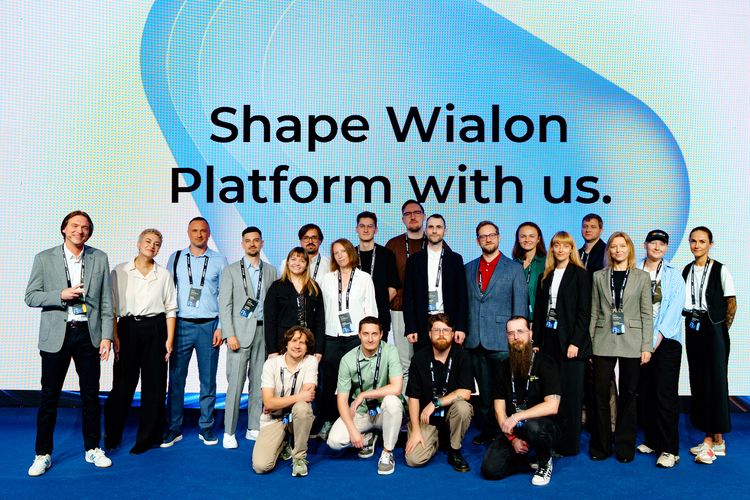
Wialon Platform team