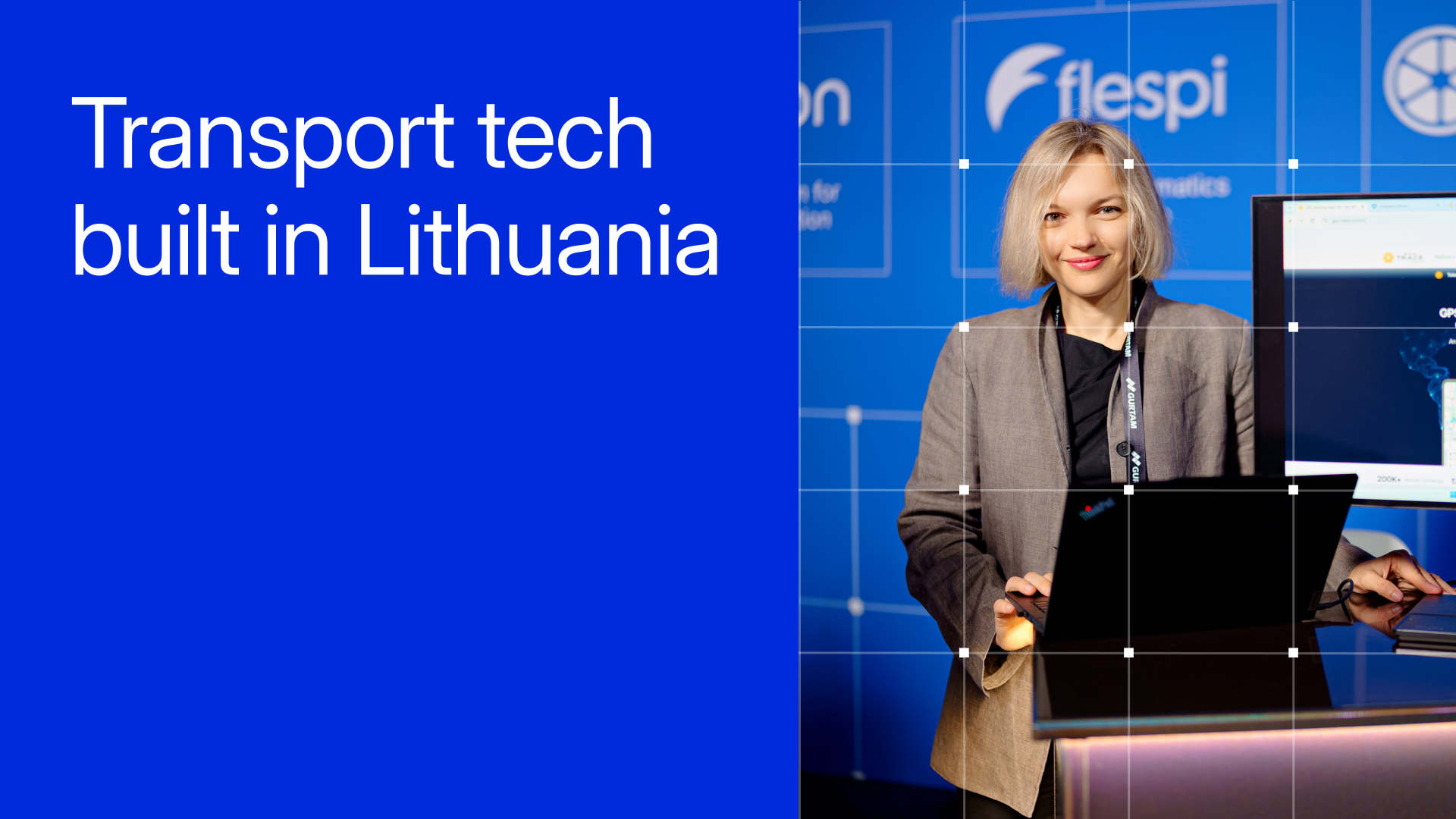
On October 14–15, Vilnius hosted the Transport Innovation Forum 2026, one of the key events for Lithuania's transport and logistics sector. Transport and technology companies, government organizations, and industry experts met to discuss today's challenges and where the industry is heading.
For Gurtam, it was the third time at the forum and the second as a member of the Transport Innovation Association.
Over two days, speakers covered topics from artificial intelligence and autonomous transport to resilient supply chains and new ways to collaborate. Below are the ideas we found most useful, not just for individual companies but for the industry as a whole.
The main message came up again and again: innovation has to solve a real problem. Dreaming bigger for its own sake, or adopting technology because it's new, doesn't get you far. Start with how a solution works in practice, then how easy it is to implement, and finally what value it brings to a business. Even the most impressive technology means little if it doesn't fix something that's actually broken.
Five takeaways worth thinking about
1. From collecting data to using it
The value of transport data is no longer about how much you collect. It's about how well you can combine information from different sources to improve specific operations. The industry is moving away from accumulating data for its own sake and toward using it to make decisions and run processes.
Roland Harwood from Milestone Systems gave a good example of this. Cities already have thousands of cameras, but most are used primarily for security. Using the AI and video anonymization, the same infrastructure could help analyze traffic, assess road safety, or manage passenger flows. In Copenhagen, Milestone is already testing how AI can assess cycling safety at intersections using video data. The point is simple: cities don't always need to collect more data. Sometimes they need to find better uses for what they already have.
2. From technology pilots to measurable value
The tech boom and the rise of startups brought plenty of excitement and big promises. But in 2026, proving that an AI system works is no longer enough. Cities and companies want to know its economic impact, reliability, and potential to scale. The "wow factor" has lost its priority, and companies want to see results before they commit to long-term investments.
3. The cheapest option isn't always the best one
Geopolitical realities are pushing logistics companies to build risk costs and contingency plans into their business models. Choosing the cheapest solution, or relying on a single option, can be a risk in itself. Companies now need to plan more broadly and prepare for disruptions before they happen. That flexibility costs money, but so does being unprepared.
Linas Dičpetris from EY raised an interesting concept during the discussion on the future of transport: the Minimum Viable Company. The idea is to identify which operations a business must be able to maintain even during a serious disruption. For a logistics company, that could mean having alternative routes, transport options, or resources ready when the usual ones become unavailable. These precautions cost money, but resilience also has a price, and businesses need to account for it.
4. From isolated innovations to collaborative ecosystems
This theme came up in several discussions. Cities need technology partners, startups need access to real operational challenges, and logistics operators need to work more closely with others along the supply chain. Strategic partnerships are also becoming a way to build resilience. Instead of competing in every area, companies are finding more opportunities to combine their efforts and gain from working together.
It takes openness, trust, and a willingness to look beyond individual projects, and it seems a lot, but the reward is adaptability for challenging conditions.
5. Solve the actual problem first
What technology companies see as innovation isn't always what customers actually need. We can talk about robots, drones, and autonomous vehicles, but someone still has to carry a sofa up to the fourth floor.
Povilas Makarevičius from Baldai1 shared how the company ended up building its own logistics operations, despite having no plans to enter the delivery business. They simply couldn't find a service that could handle large furniture deliveries the way their customers needed.
It's a good reminder that innovation doesn't always have to involve advanced technology. The industry sometimes overlooks problems this simple. A new technology is only useful if it makes a real task easier, faster, cheaper, or more reliable. Not every improvement has to be revolutionary to matter, so start with the everyday problems.
Unless, of course, you are working on a flying car. In that case, build the flying car first.
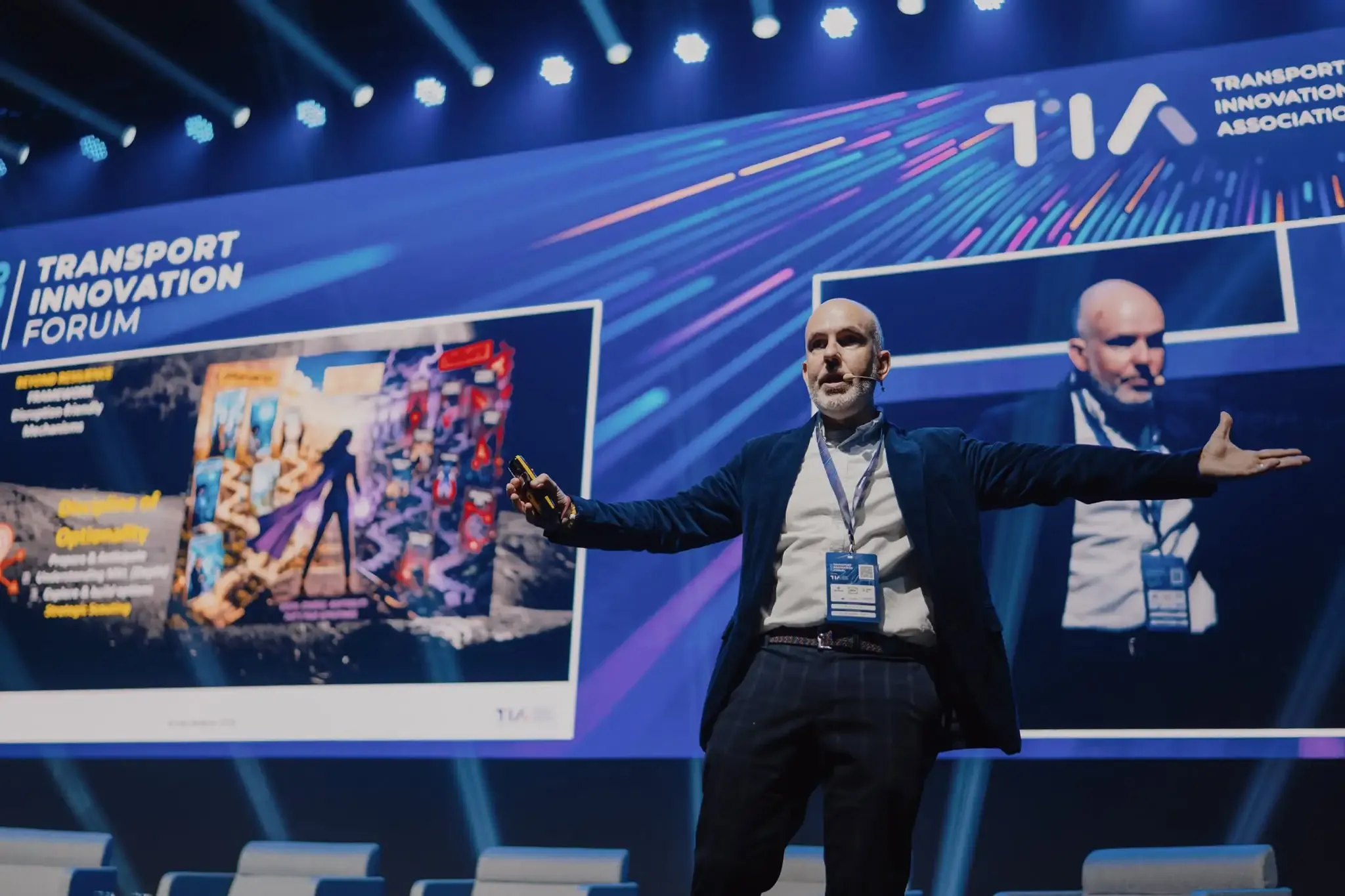
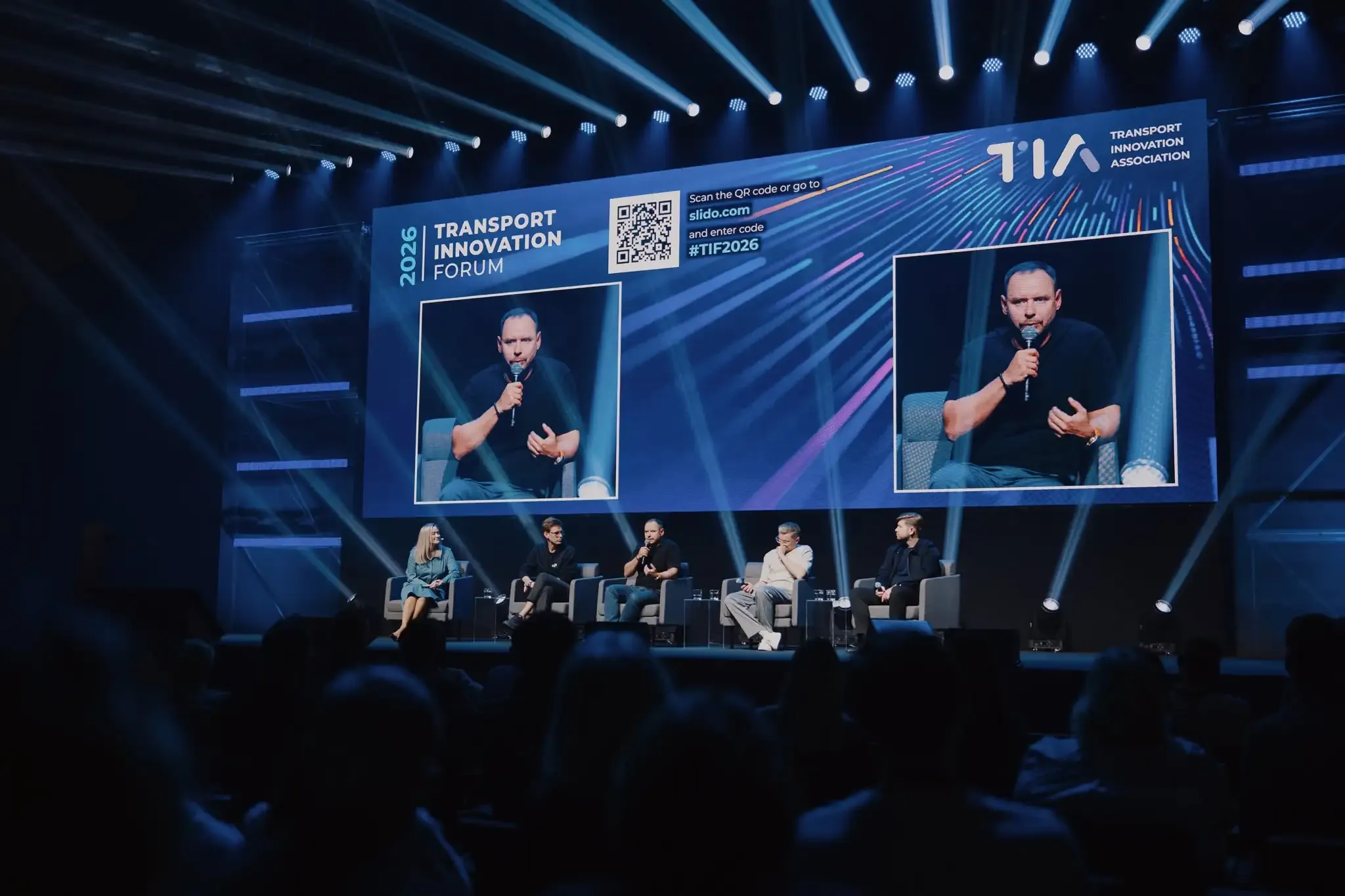
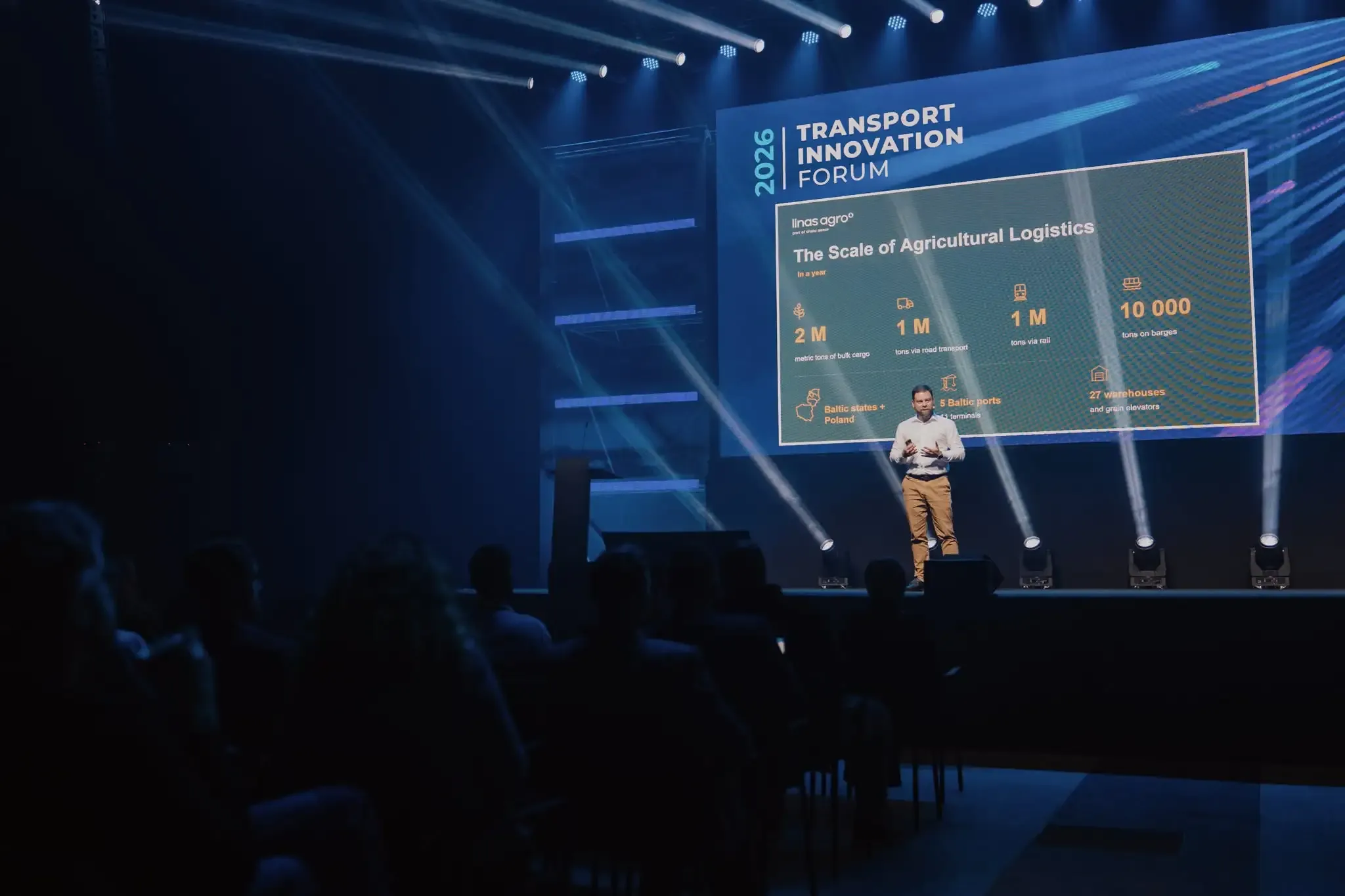
Innovation happens when things get uncomfortable
Looking at these five takeaways together, one thing becomes clear: successful innovation depends on more than technology alone. Overall, transport innovation can be viewed on three levels: technology, organizational processes, and the real needs of people and businesses. All three matter when making decisions.
To turn an idea into something useful, it helps to take a pause and answer three questions:
-
Technology: what can we actually do? Can we use AI to analyze road conditions, predict traffic, or automate transport operations? What solutions already exist, and what do they make possible?
-
Organizational processes: are we ready to implement it? Do we have the right data, system integrations, cooperation between companies, enough budget, and a clear path to scale? As many discussions at the forum showed, this is often where the biggest challenges appear.
-
Real needs: why are we doing this in the first place? What specific problem are we solving? Does the solution genuinely help the business or its users? Is the value worth the investment?
Only with those answers can we move forward. Fortunately, the transport industry has plenty of room for innovation, precisely because it is full of tensions and contradictions. Autonomous technologies are advancing faster than society is ready to accept them. Startups challenge the established ways of traditional businesses. Environmental goals often clash with immediate commercial priorities.
These tensions create friction, but they also push the industry to look for new solutions, rethink existing approaches, and move faster. As several speakers noted, innovation often happens when things get uncomfortable. After all, that's often where new opportunities begin.
Further reading: Gurtam's perspective on AI in transport
This focus on practical applications is something we at Gurtam have been discussing for a while. At the previous Transport Innovation Forum 2025, Gurtam's founder and CEO, Aliaksei Shchurko, shared his view on the role of AI in transportation, looking beyond autonomous driving to what businesses can already do today. His talk covered how AI can be applied to everyday operations, and why understanding the problem matters as much as choosing the technology to solve it.
You can revisit these ideas in our article, AI in transportation: beyond autonomous driving.