The European aftermarket telematics sector has spent years adapting to change. By 2035, however, the environment around it may look fundamentally different. That makes conventional long-term forecasting increasingly fragile, but that is not an argument for planning less; on the contrary, it is an argument for planning against more than one future.
With more than 20+ years of experience in telematics, Gurtam has seen the industry evolve through multiple technology cycles, regulatory shifts, and changes in how fleets use connected data. Now, we are looking further ahead.
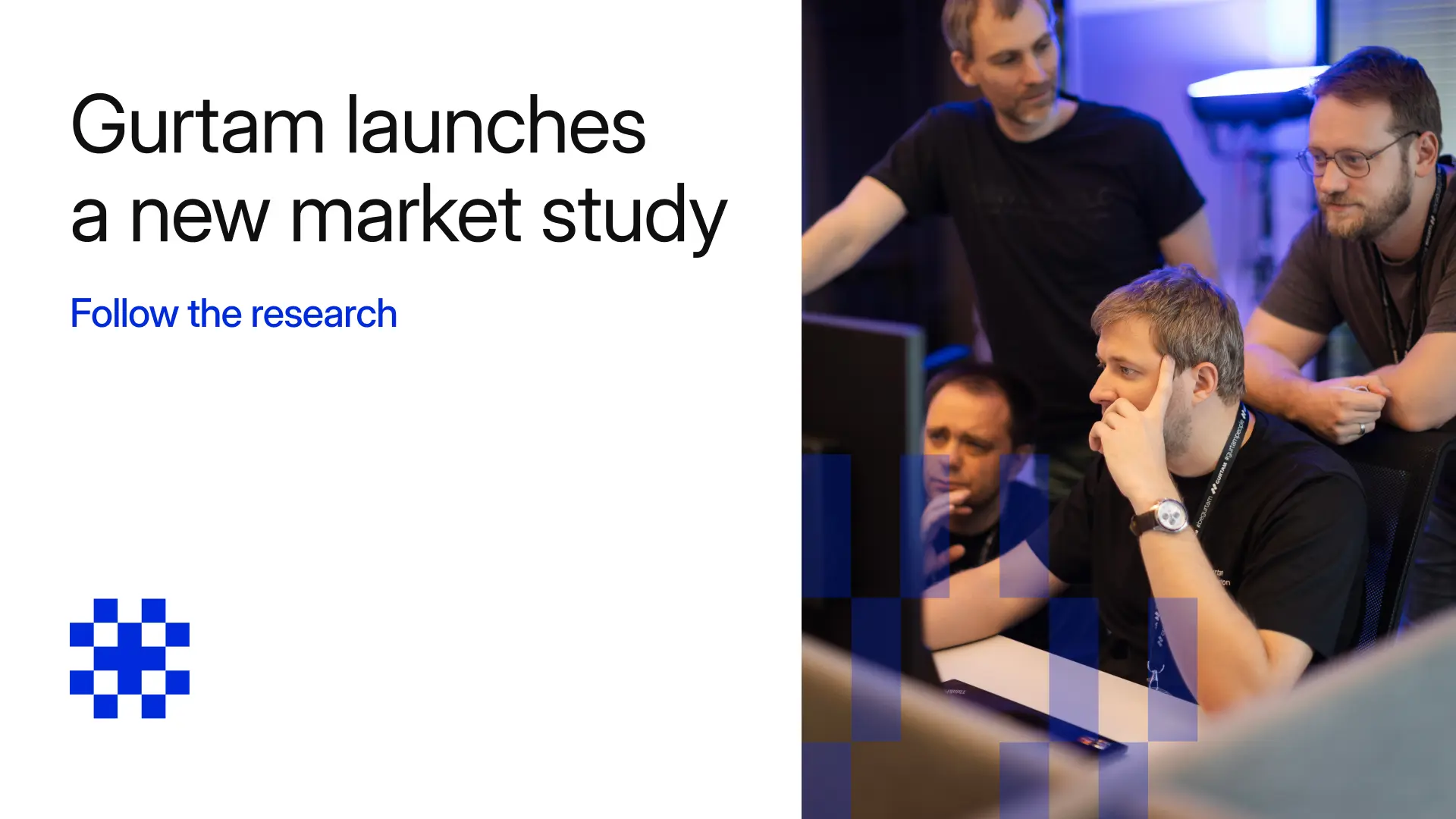
Gurtam is launching a scenario study to explore how changes in Europe’s wider business could reshape the aftermarket telematics sector by 2035, and what different plausible futures could mean for the companies operating within it.
The aim is not to predict what the market will look like in almost ten years from now. It is to identify the forces that could reshape it, examine how they might interact, and provide market participants with a framework for considering several possible futures rather than relying on a single expected one.
Subscribe to get the study first in the form below ↓
Ghost scenario bias
Regulated demand, energy economics, the cost of capital, and other factors shaping the business environment are each moving on their own clock. None of them are decided by the players in the aftermarket telematics sector. Under these conditions, a five- or ten-year forecast is not a plan, but a highly educated guess at best.
What replaces it, sometimes without acknowledgment, is a single assumed picture of the future carried within the strategy. It’s rarely written down and almost never tested. Oxford Scenario Planning Approach calls it a ghost scenario. Many organizations operate under it, without a proper discussion.
Get ready for multiple futures
The scenario approach does not offer a forecast or probability. It’s a small set of plausible, contrasting descriptions of the context the sector could find itself operating in, each internally consistent and with different consequences for who has a viable business. The value of scenarios is not about being right. The goal is to make the ghost scenario visible by showing that multiple futures are available and by letting market players recognize which one it is early enough to act on.
The scenario study is using the Oxford Scenario Planning Approach and is built on interviews with people who know this ecosystem exceptionally well. No market sizing, no company rankings, no probabilities. We do not ask respondents about their strategies or roadmaps. We discuss the environment that will eventually shape the strategy and identify the factors that will affect it.
Why Gurtam?
Gurtam builds products that are part of the aftermarket telematics layer and would prefer that the layer exists in 2035, so we naturally have an interest in the sector, but we are also part of the huge interconnected ecosystem. Since we do not build hardware or offer telematics solutions to fleets, we have no stake in which individual company in this ecosystem does best.
We believe the aftermarket telematics layer is underrepresented in the conversations that shape it. Platforms of scale have a voice. The small- to medium-sized telematics service providers and dozens of hardware developers who make up most of the sector largely remain unrecognized in the picture that regulators and OEMs work with, and we want to add more visibility to this missing piece.
The study we are running aims to provide a more complete and cohesive picture of potential future scenarios while taking into account the majority of market actors. Our goal is to have an honest conversation with players in the aftermarket telematics sector and representatives from adjacent industries to surface diverse perspectives and help to move the whole sector forward.
Get the study
The research will run from August 2026 through January 2027.
If you work in or closely with the telematics ecosystem and believe your perspective could deepen understanding of where the market is heading, we would be glad to hear from you. You can reach out directly to Maryia Filimanchuk on LinkedIn to discuss participation.
About the study
Gurtam defines the aftermarket telematics sector as platforms, telematics service providers, integrators, GPS hardware and adjacent device makers, connectivity and data providers serving road and off-highway vehicles and assets across the EU, EEA, UK, Switzerland, and Turkey.
Timeline - we expect the study to be published in the first part of 2027.